

The Specifier's Guide to Division 10 Bathroom Accessories
If you've ever specified a commercial bathroom project, you know that Division 10 accessories are often treated as an afterthought. They're the last items on the submittal schedule, the first things cut when budgets get tight, and somehow always the products that show up wrong on site.
But here's the thing: Division 10 bathroom accessories can make or break the user experience in any commercial space. A wobbly towel bar or a poorly mounted grab bar doesn't just look bad: it creates liability, maintenance headaches, and unhappy building occupants.
Let's walk through what specifiers actually need to know about Division 10 bathroom accessories, from product selection to installation details that actually matter.
What Falls Under Division 10?
Division 10 in the CSI MasterFormat covers specialties: products that enhance a building's functionality without being part of its core structure. For bathroom applications, this includes all the hardware people interact with daily:
Core Accessories:
Shower rods (straight and curved)
Toilet paper holders
Towel bars and rings
Robe hooks
Soap dishes and dispensers
Safety and ADA Products:
Grab bars (straight, L-shaped, and specialty configurations)
Folding shower seats
Tub and shower benches
Specialty Items:
Shower caddies and corner baskets
Medicine cabinets
Mirrors
Waste receptacles
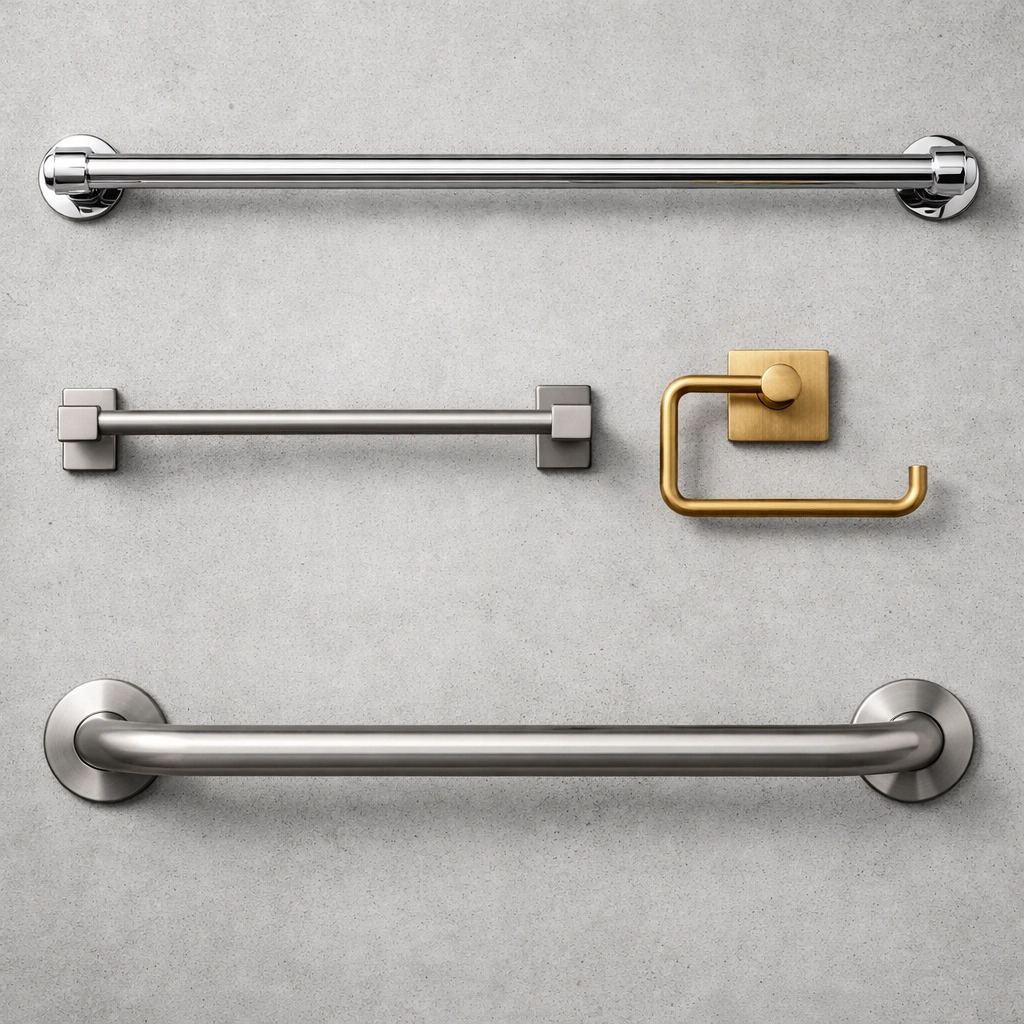
The quality spectrum here is enormous. You can spec a towel bar that costs $12 or $120, and they might look identical in a catalog photo. The difference shows up six months after installation when one is loose and corroding while the other still functions like new.
Material and Finish Considerations
Most commercial bath accessories come in a few standard materials, each with trade-offs worth understanding.
Stainless Steel is the workhorse of commercial installations. It resists corrosion, handles abuse, and maintains appearance with minimal maintenance. Grade 304 stainless is standard; 316 is better for coastal or high-humidity environments. Brushed finishes hide fingerprints and water spots better than polished.
Solid Brass offers superior durability and a premium feel. When properly plated with chrome, polished nickel, or other finishes, brass accessories can last decades in heavy-use environments. The weight difference is noticeable: a solid brass robe hook feels substantial compared to hollow alternatives.
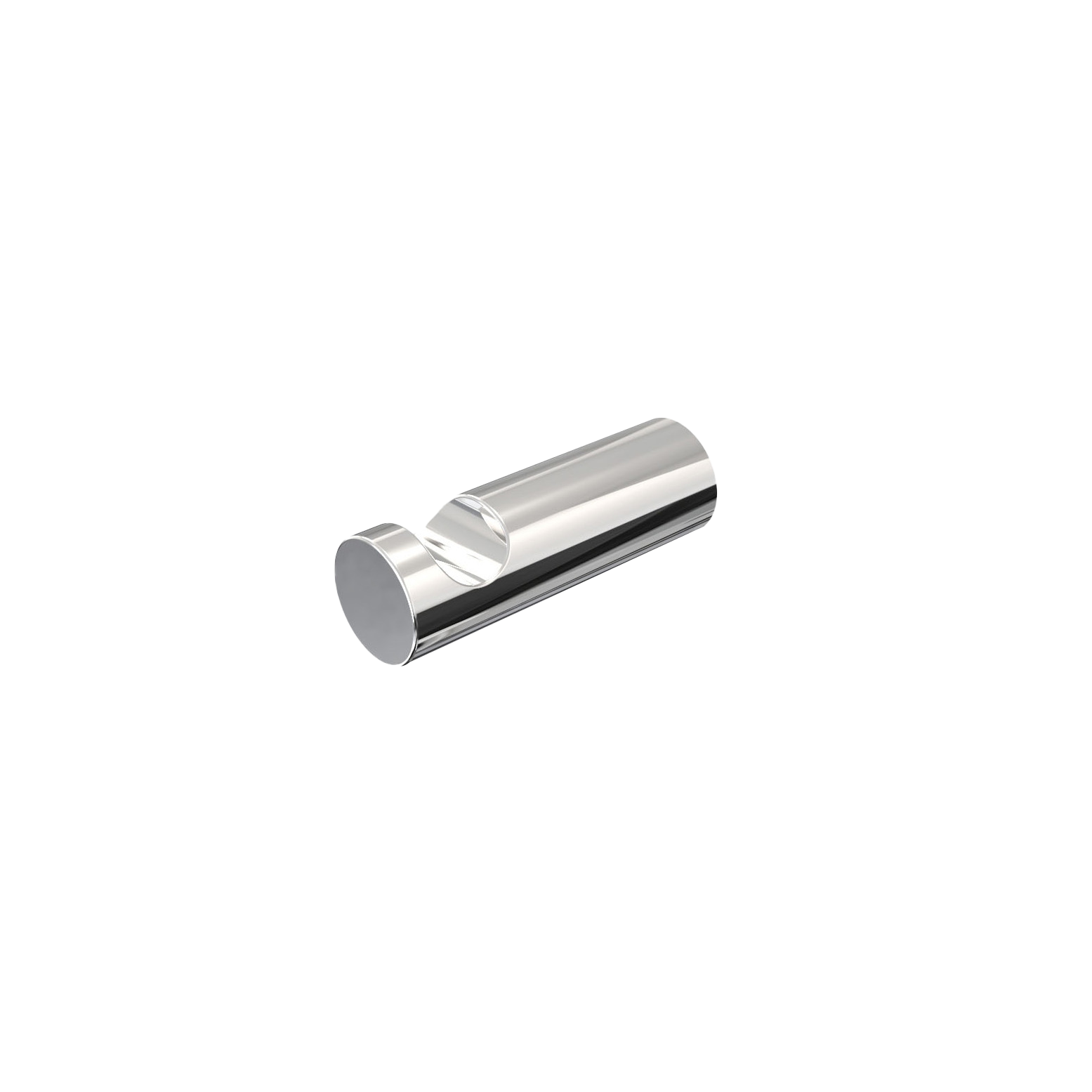
Zinc Alloy is common in budget products. It's lighter, cheaper, and adequate for light-duty applications. The problem is that many manufacturers don't clearly disclose what you're getting. If the spec sheet doesn't explicitly say "solid brass" or "stainless steel," it's probably zinc.
Finish Durability matters more than most specifiers realize. Chrome plating can be 5 microns thick or 25 microns thick: the thinner version will show wear quickly. PVD (Physical Vapor Deposition) finishes offer superior scratch and corrosion resistance but cost more upfront. For high-traffic commercial applications, it's worth the premium.
The Mounting Problem Nobody Talks About
Here's a scenario every architect has encountered: You specify quality accessories. The submittal comes back approved. Installation happens. Six months later, maintenance is re-tightening every towel bar in the building because they're all loose.
The problem isn't usually the accessory: it's the mounting system.
Traditional mounting relies on screws into drywall anchors or direct stud mounting. Both methods have issues. Drywall anchors work until someone yanks on the towel bar. Stud mounting limits placement options and doesn't always align with your design intent or ADA requirements.
This is where systems like the Versa Mounting System make a difference. These concealed mounting systems use larger backing plates that distribute load across a wider area of the wall assembly. The result is accessories that stay tight and don't pull loose under normal use.
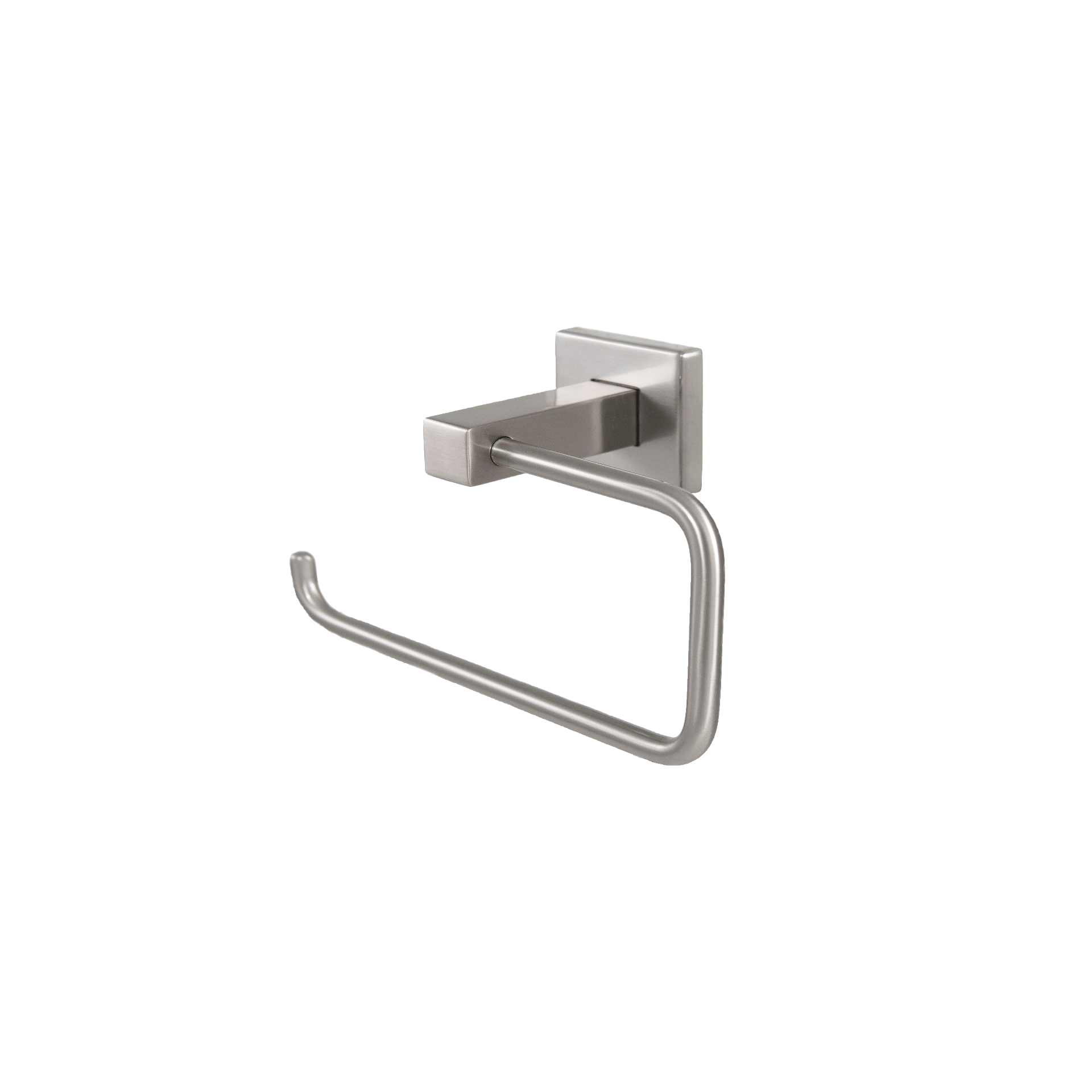
When you're specifying accessories, pay attention to the mounting method. Ask manufacturers:
What's the pull-out resistance rating?
How is load distributed?
What's required behind the wall?
Can installers make minor adjustments on site?
A better mounting system reduces callbacks and creates a better long-term experience for building occupants.
ADA Compliance: Getting the Details Right
Grab bars and shower seats aren't optional in most commercial applications: they're required. But meeting ADA standards means more than just including them in your spec.
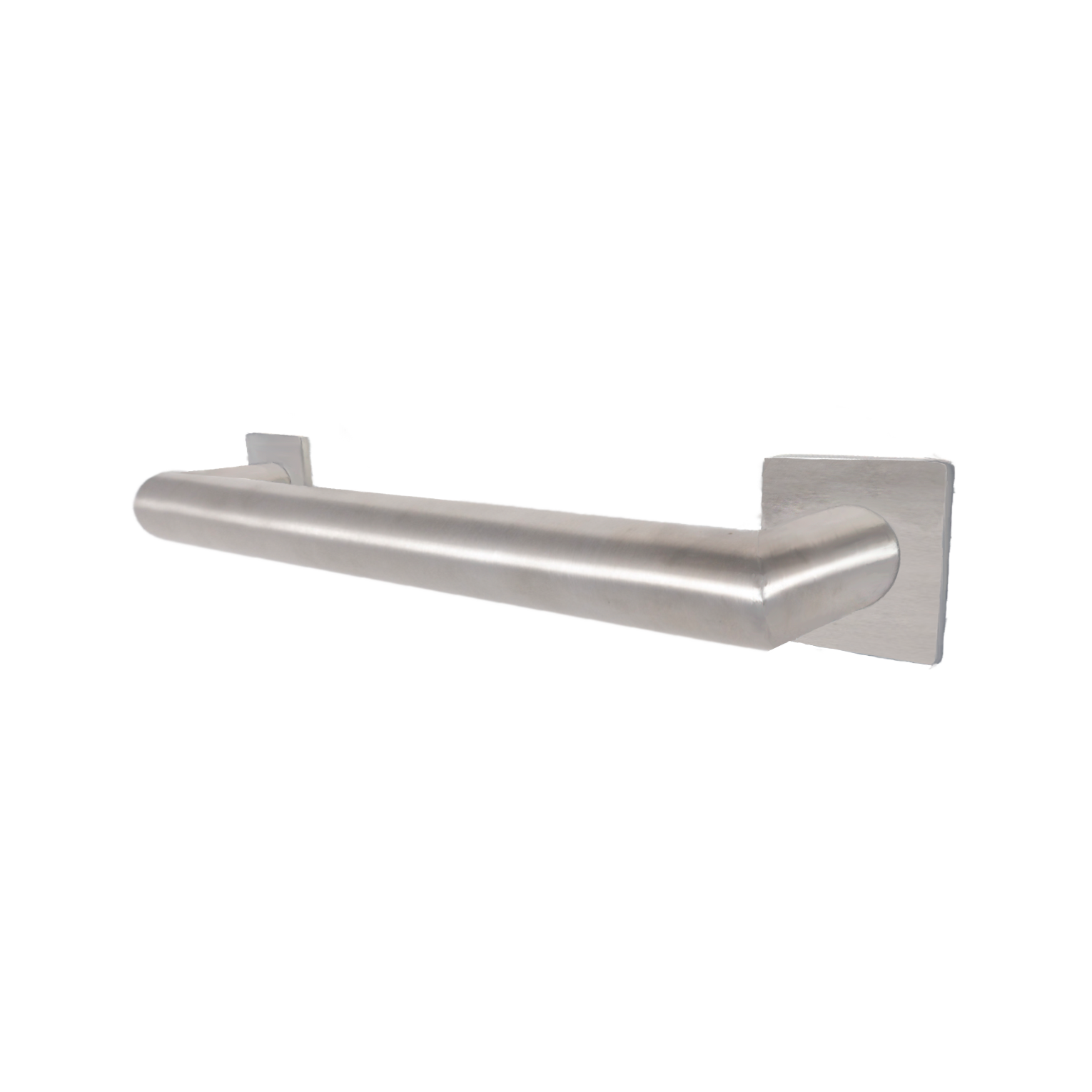
Grab Bar Specifications: Grab bars must withstand a minimum downward force of 250 pounds when tested per ASTM F446. That's the code minimum. Many quality manufacturers design to 500-pound capacity for added safety margin.
Diameter matters: 1.25 to 2 inches is the required range. Too thin and users can't grip properly; too thick and hand closure becomes difficult.
Mounting clearance: 1.5 inches minimum between the bar and wall. This allows proper hand placement and doesn't create pinch points.
Height requirements vary by application:
Toilet grab bars: 33-36 inches above floor
Shower grab bars: 33-36 inches above shower floor
Tub grab bars: Varies by configuration
Shower Seat Requirements: Folding shower seats must be mounted 17-19 inches above the shower floor when in the down position. The seat must be at least 15 inches deep and extend the full depth of the stall. Weight capacity minimum is 250 pounds.
Common Specification Mistakes:
Not coordinating grab bar locations with shower valve placement
Specifying grab bars that interfere with shower door swing
Failing to indicate blocking requirements on drawings
Not accounting for tile thickness in mounting heights
Omitting edge protection on bar ends
Include blocking details in your wall sections. Don't assume contractors will figure it out. Specify exact blocking locations tied to your accessory placement.
Shower Rod Selection
Shower rods seem simple until you start comparing options. Straight rods, curved rods, square profile, round profile, surface mount, concealed mount: each choice affects both aesthetics and function.
Straight vs. Curved: Straight rods are simpler and generally more durable. Curved rods add interior shower space but put more stress on mounting points. If you specify curved rods, make sure the mounting system can handle the cantilevered load.
Profile and Finish: Round profiles are traditional. Square profiles read more contemporary but show water spots more readily. Match the profile to other bathroom hardware for visual consistency.
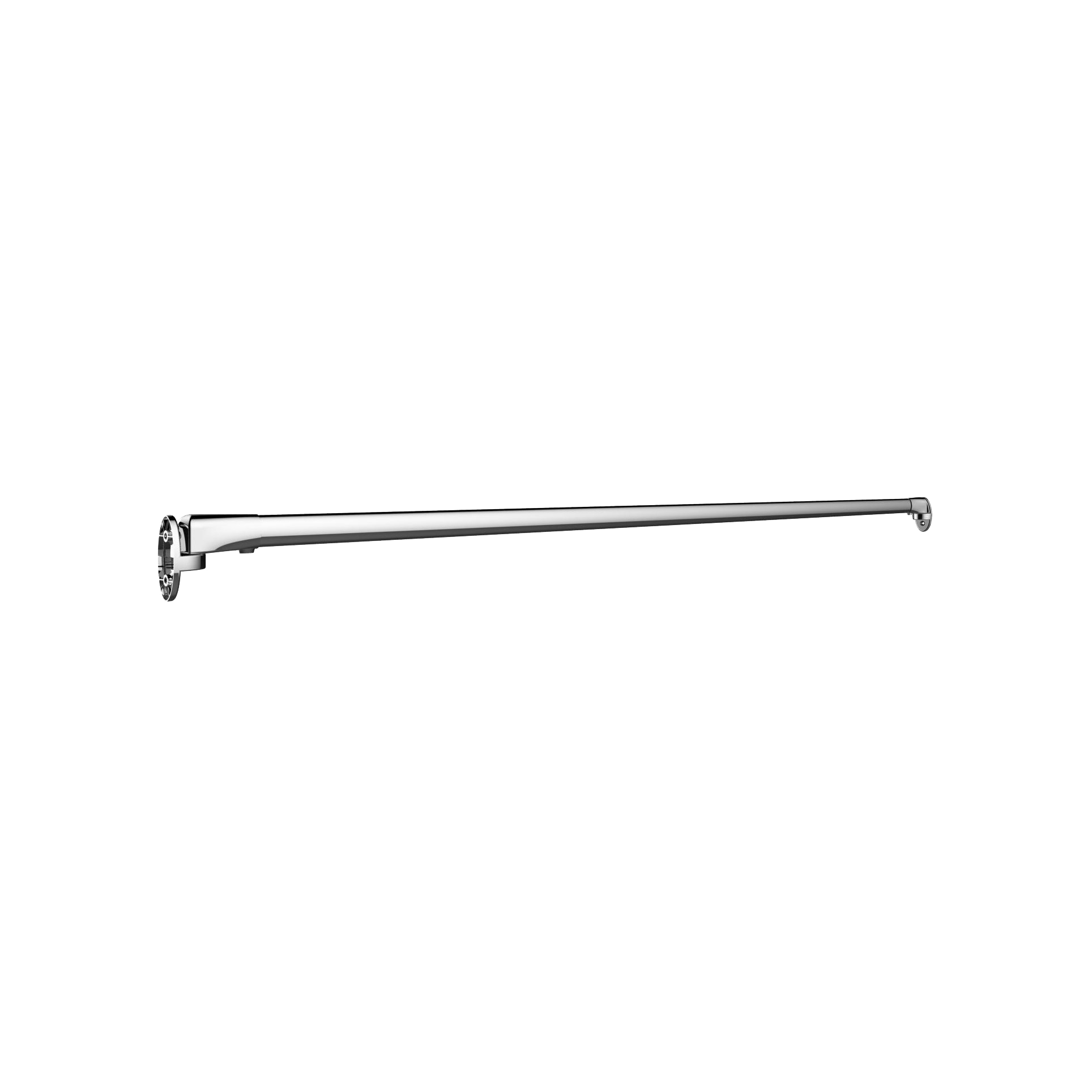
Mounting Style: Concealed mounting looks cleaner but requires exact rough-in dimensions. Surface mounting is more forgiving during installation and easier to service. Consider maintenance access when making this decision.
Heavy-Duty Brackets: Commercial applications need brackets that won't deform. Look for solid brass or stainless steel construction. Tamper-resistant hardware prevents theft in accessible public areas.
Coordination with Other Trades
Division 10 accessories don't install in a vacuum. Poor coordination creates problems.
With Tile and Stone (Division 09): Finalize accessory locations before tile layout. Accessories should land on grout lines when possible, not in the center of tiles. Provide mounting height dimensions from finish floor, not rough floor.
With Plumbing (Division 22): Shower valve location affects grab bar placement. Toilet supply lines can interfere with toilet paper holder mounting. Review plumbing rough-in drawings against your accessory placement.
With Electrical (Division 26): Mirrors often include integral lighting. Hand dryers require dedicated circuits. Coordinate locations early to avoid conflicts with accessory placement.
With Blocking and Backing: This is critical. If your specs don't clearly call out blocking locations, you'll get random stud placement that doesn't align with your accessory layout. Include blocking plans in your drawing set, not just accessory locations.
Submittal and Documentation Requirements
Good submittals save headaches during installation. Require manufacturers to provide:
Complete product data sheets with dimensions and specifications
Mounting instructions with blocking requirements
Finish samples (especially important for matching existing work)
Load test certifications for ADA products
Warranty information
Maintenance and cleaning instructions
Review submittals against your design intent, not just code compliance. A product can be ADA-compliant and still be wrong for your project.
Thinking Long-Term
The cheapest accessories rarely deliver the lowest total cost of ownership. Factor in:
Maintenance frequency: How often will staff need to tighten, clean, or replace items?
Replacement parts availability: Can you get matching pieces in five years?
Finish durability: Will it still look good after thousands of uses?
Vandal resistance: Is this product appropriate for the security level required?
Quality Division 10 accessories might cost 30-50% more upfront but can last three times longer and require far less maintenance. Run the numbers over a 10-year timeline, and the value proposition becomes clear.
Final Thoughts
Division 10 bathroom accessories deserve more attention than they typically get during design and specification. These are the products people interact with every single day. A well-specified and properly installed accessory package contributes to building quality in a tangible, immediate way.
Focus on quality materials, proper mounting systems, accurate ADA compliance, and coordination with other trades. Your clients, contractors, and building occupants will all appreciate the difference.
Comments